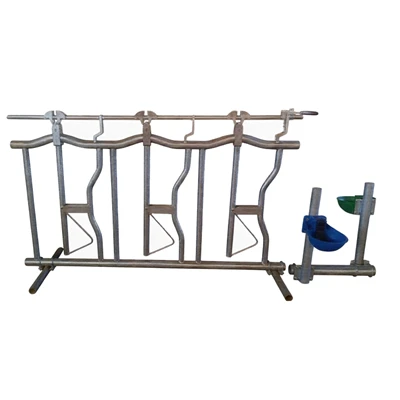
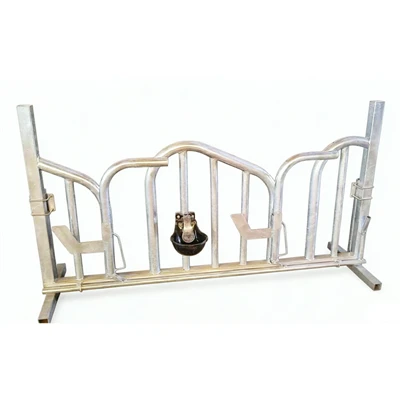
What is Farrowing Crate?
Pig farrowing crates are barred metal crates within a pen where pregnant sows are placed shortly before giving birth. Farrowing crates prevent the sows from turning around and only allow them to move a little forward and backward.Alongside the farrowing crate, within the pen, there is an area called a “creep” that the sow’s piglets can move into. This is often heated to attract the piglets from lying next to the sow. The piglets are still able to reach the sow’s teats to suckle but when they are in the creep, she is prevented from being able to clean or interact with them.
Advantages of Farrowing Crate
Increased survival rates
Farrowing crates restrict the sow's movement, reducing the likelihood of her accidentally crushing or lying on her piglets. This protection helps improve survival rates among newborns.
Enhanced mothering
The crate provides a secure environment where the sow can focus on nursing and caring for her piglets without the stress of competing for space or dealing with aggressive behavior from other sows.
Efficient use of space
The design of farrowing crates allows for close observation of both the sow and her litter, making it easier for farmers to monitor their health and well-being without disturbing them excessively.
Consistent management
Farrowing crates facilitate standardized practices for feeding, cleaning, and veterinary care, which can lead to more uniform growth and development among piglets and improved overall farm management.
-
![China Sow Farrowing Crates]() China Sow Farrowing CratesIntroduction of Pig Farrowing Crate This farrowing crate was designed scientifically, it is easy to install, and can be suitable for all the farms in different size. It has been popular for so many
China Sow Farrowing CratesIntroduction of Pig Farrowing Crate This farrowing crate was designed scientifically, it is easy to install, and can be suitable for all the farms in different size. It has been popular for so many -
![Livestock Farm Equipment Sow Farrowing Stall]() Livestock Farm Equipment Sow Farrowing StallFeature:Size: 3800x2400mmFloor: Cast iron for Sow: 700x1200mm Plastic floor for piglets: 500x600mm 700x600mmFeeder: SS sow feeder Frame: Steel Farm or
Livestock Farm Equipment Sow Farrowing StallFeature:Size: 3800x2400mmFloor: Cast iron for Sow: 700x1200mm Plastic floor for piglets: 500x600mm 700x600mmFeeder: SS sow feeder Frame: Steel Farm or -
![Pig Farm Equipment Pig Farrowing Pen]() Pig Farm Equipment Pig Farrowing PenPig Farm Equipment Pig Farrowing Pen.This Sow farrowing Pen is easy to install and clean, and can be customized for all Pig farms in different size. It has been popular for so many years, and was
Pig Farm Equipment Pig Farrowing PenPig Farm Equipment Pig Farrowing Pen.This Sow farrowing Pen is easy to install and clean, and can be customized for all Pig farms in different size. It has been popular for so many years, and was -
![2018 Philippines Farrowing Crate For Sale]() 2018 Philippines Farrowing Crate For SaleProduction Description of pig farrowing crate 1. 2400mm x 1800x500mm; 2. φ32*2.5mm and φ26*2.5mm steel tube for sow stall; Hot dipped galvanized after welding. 3. Cast iron slat 600x600mm for sow;
2018 Philippines Farrowing Crate For SaleProduction Description of pig farrowing crate 1. 2400mm x 1800x500mm; 2. φ32*2.5mm and φ26*2.5mm steel tube for sow stall; Hot dipped galvanized after welding. 3. Cast iron slat 600x600mm for sow; -
![Sow Farrowing Crates]() Sow Farrowing CratesIntroduction of Pig Farrowing Crate This farrowing crate was designed scientifically, it is easy to install, and can be suitable for all the farms in different size. It has been popular for so many
Sow Farrowing CratesIntroduction of Pig Farrowing Crate This farrowing crate was designed scientifically, it is easy to install, and can be suitable for all the farms in different size. It has been popular for so many -
![New Welfare-type Farrowing Crates For Sale From Shengxin]() New Welfare-type Farrowing Crates For Sale From ShengxinIntroduction of Pig Farrowing Crate This farrowing crate was designed scientifically, it is easy to install, and can be suitable for all the farms in different size. It has been popular for so many
New Welfare-type Farrowing Crates For Sale From ShengxinIntroduction of Pig Farrowing Crate This farrowing crate was designed scientifically, it is easy to install, and can be suitable for all the farms in different size. It has been popular for so many -
![Pig Farrowing Crate Of Farm Equipment]() Pig Farrowing Crate Of Farm EquipmentIntroduction of Pig Farrowing Crate This farrowing crate was designed scientifically, it is easy to install, and can be suitable for all the farms in different size. It has been popular for so many
Pig Farrowing Crate Of Farm EquipmentIntroduction of Pig Farrowing Crate This farrowing crate was designed scientifically, it is easy to install, and can be suitable for all the farms in different size. It has been popular for so many -
![Pig Farrowing Crate With High Quality In The World]() Pig Farrowing Crate With High Quality In The WorldIntroduction of Pig Farrowing Crate This farrowing crate was designed scientifically, it is easy to install, and can be suitable for all the farms in different size. It has been popular for so many
Pig Farrowing Crate With High Quality In The WorldIntroduction of Pig Farrowing Crate This farrowing crate was designed scientifically, it is easy to install, and can be suitable for all the farms in different size. It has been popular for so many -
![Pig Farrowing Crate]() Pig Farrowing CrateIntroduction of Pig Farrowing Crate This farrowing crate was designed scientifically, it is easy to install, and can be suitable for all the farms in different size. It has been popular for so many
Pig Farrowing CrateIntroduction of Pig Farrowing Crate This farrowing crate was designed scientifically, it is easy to install, and can be suitable for all the farms in different size. It has been popular for so many -
![Pig Farrowing Crate With High Quality]() Pig Farrowing Crate With High QualityIntroduction of Pig Farrowing Crate This farrowing crate was designed scientifically, it is easy to install, and can be suitable for all the farms in different size. It has been popular for so many
Pig Farrowing Crate With High QualityIntroduction of Pig Farrowing Crate This farrowing crate was designed scientifically, it is easy to install, and can be suitable for all the farms in different size. It has been popular for so many -
![Galvanized Pig Farrowing Crate For Pig Farm]() Galvanized Pig Farrowing Crate For Pig FarmIntroduction of Pig Farrowing Crate This farrowing crate was designed scientifically, it is easy to install, and can be suitable for all the farms in different size. It has been popular for so many
Galvanized Pig Farrowing Crate For Pig FarmIntroduction of Pig Farrowing Crate This farrowing crate was designed scientifically, it is easy to install, and can be suitable for all the farms in different size. It has been popular for so many -
![Farrowing Pen Pig Crate]() Farrowing Pen Pig CrateProduction Description of pig farrowing crate 1. 2400mm x 1800x500mm; 2. φ32*2.5mm and φ26*2.5mm steel tube for sow stall; Hot dipped galvanized after welding. 3. Cast iron slat 600x600mm for sow;
Farrowing Pen Pig CrateProduction Description of pig farrowing crate 1. 2400mm x 1800x500mm; 2. φ32*2.5mm and φ26*2.5mm steel tube for sow stall; Hot dipped galvanized after welding. 3. Cast iron slat 600x600mm for sow;


Why Choose Us?
Rich experience
Dedicated to strict quality control and attentive customer service, our experienced staff is always available to discuss your requirements and ensure complete customer satisfaction.
Quality control
We have professional personnel to monitor the production process, inspect the products and ensure that the final product meets the required quality level standards, guidelines and specifications.
High quality
Our products are manufactured or executed to very high standards, using the finest materials and manufacturing processes.
24h online service
We try and respond to all concerns within 24 hours and our teams are always at your disposal in case of any emergencies.
In indoor intensive systems, pregnant gilts/sows (female pigs) are moved to a farrowing crate, also known as a piglet protection pen, approximately a week before farrowing (giving birth) [1]. Farrowing crates confine sows so that they are unable to turn around. Some indoor systems may have farrowing pens which can be adjusted to either provide the sow freedom to move or be confined to protect piglets from being crushed. The confinement of sows is intended to protect piglets from being crushed, particularly during farrowing (birthing) and the following few days when the risk of crushing is high. Farrowing crates, and the ability to confine the sow, allows easy access to piglets for routine husbandry procedures that commonly occur in their first few days of life.
In outdoor extensive systems, pregnant gilts/sows are moved to farrowing huts located in an outdoor area or paddock. The farrowing huts are usually bedded with straw and are big enough to allow the female pig to turn and walk around easily. Some huts may also have guards around the front of the hut that sows can easily step over to get outside but keeps piglets in the hut during their first few days or weeks of life.
Farrowing crates confine the sow but give piglets room to access the udder, as well as a separate creep area away from the sow to keep them warm and protected, whereas farrowing huts allow the sow and her piglets (from around 1-2 weeks of age) to access the outdoor area. The sow has access to the farrowing hut or remains in the farrowing crate for 3-4 weeks after farrowing, at which time her piglets are weaned and moved to weaner housing. After weaning, the sow will usually come back ‘on-heat’ (be fertile) within a few days. At this point, the sow is mated again through artificial insemination which usually involves being confined in a mating stall for several days, and is then returned to group housing.
In indoor systems, weaned piglets are grown out in group pens with concrete floors or slats with or without bedding. In semi-indoor systems (outdoor bred or bred free range), the piglets grow out in large, deep-bedded shelters (also known as ecoshelters) with bedding (such as straw or rice hulls). Whereas in outdoor systems (free range), weaned piglets may be raised in similar bedded shelters but with an outdoor area attached or in outdoor areas with smaller shelters.
Components of Farrowing Crate
Structure
Pig farrowing crate is also called pig farrowing house or pig farrowing fence. A pig farrowing crate includes sow locating frame, piglet fence, piglet incubator, manure dropping floor, trough for sow and supplementary feeding trough for piglet, etc. The locating frame is used for control the free range of sow’s movement. There’re bars between each locating frame, in order to avoid being run over of the piglet.
Material & crafts
The sow locating frame is generally 2.1-2.4 meters long, 1.0 meters wide. After welded, the whole set will adopt hot galvanizing technology, including the welded junction. So the welded junctions are fastness with no burr. It can avoid rusting and breaking, and totally no harm to the pigs. At the bottom of the locating frame, there are curving bumping columns which can protect the piglets .
Piglets fence provide activity space and prevent them from running off. The fence adopted clapboard design, which can prevent diseases efficiently. There is space between farrowing crate and sow tail, making the workers help sow to farrow more convenient, also good for piglets moving freely. The supplementary feeding trough and the waterer bowl are at the back of the fence. It also has defecation area at the back. The floor of the arrowing house are made of plastic and cast iron.
There are several alternative farrowing systems to traditional farrowing crates, where sows may be confined for a shorter period or not confined at all. Temporary crating systems confine sows immediately prior and during farrowing, as well as for the first few days after farrowing but are then opened to allow the sow more freedom to move. These temporary crating systems confine sows during this time to minimise the risk of piglet mortality due to crushing, which is most likely to occur during farrowing and in the first two-to-three days after farrowing. However, immediately before farrowing is also the period that a sow is most motivated to perform nest building behaviours and thus can become frustrated if unable to move around and access nesting materials. During and immediately after farrowing are the periods that sows are likely to perform comfort behaviours to ease the pain from farrowing and interact with their piglets to establish a maternal bond, which they are also unable to easily do when confined in a farrowing crate.
Alternative farrowing systems where the sow is not confined at all and is able to move freely include individual or group farrowing pens with or without group suckling of piglets (used in indoor systems), indoor farrowing pens with access to an outdoor area, and outdoor farrowing huts located in paddocks (free-range or outdoor-bred systems). Gilts/sows in free-farrowing systems, where they are not confined, have been shown to display less abnormal behaviours and less pain during farrowing. Providing freedom to move during farrowing and lactation also encourages maternal interactions with piglets and may encourage more natural nursing and weaning of piglets.
Providing sows with suitable nesting material is critical for their welfare. For example, providing straw prior to farrowing so that they can perform nesting behaviours can decrease stress and pain levels in sows, as well as improve piglet survival and development. Further, to allow for innate foraging behaviour, sows in farrowing crates should be provided with appropriate foraging material that are edible and/or otherwise satisfy the sow’s need to chew, investigate and manipulate objects and substrates in her environment.
While alternative farrowing systems currently available are often associated with slightly higher piglet mortality rates than traditional farrowing crates, they can significantly improve sow welfare during gestation, farrowing and lactation until weaning. The improvements in animal welfare can also benefit piglet welfare in the long term, improving piglet development and behaviour (e.G., increased weight gain and decreased aggressive damaging behaviours towards other pigs), which can lead to improved production performance overall.
How to Choose Farrowing Crate
Consider the environment
First of all, you may want to consider the environment to find out if it is suitable for pig breeding. Make sure that the environment is neither too hot nor too cold or you may have to suffer a lot of loss. Baby pigs cannot survive in harsh environments.
Look for strong units
Since you are going to use crates to protect your animals, make sure that they are strong enough to keep them in. Similarly, you must know about your state rules and regulations so that you don’t get in trouble.
Count your pigs
If you are just getting started, you may not have a lot of animals on your pig farm. Therefore, you can manage your animals using a small unit. Similarly, you should estimate how many of the female pigs will deliver babies. This approach will help you decide on the best size to cover your needs.
Go for the best type
The good news is that you can choose from different types of farrowing crates. For instance, there are farrowing cages and gestation boxes. Don’t forget to set your budget before putting your hard-earned money into a crate.
If you are just starting out, there is no need to invest in a large, high-end crate. After all, you don’t want to spend all your money on this purchase.
Consider the hygiene aspect
Since you will need to clean your form on a daily basis, make sure that the crates are not difficult to maintain. This should not make it difficult for you to access different areas of your pig breeding farm. This aspect is important if you want to ensure that your animals will stay away from diseases.
Consider the mounting system
Make sure that the farrowing crate can be fixed in the ground using a strong mounting system. If the mounting system is not working properly, the unit may not be able to protect your animals. As a matter of fact, the adult pigs may end up stepping on the babies due to weak crates. Therefore, we suggest that you consider the quality of the ground fixing system.
6 Steps to Prep Farrowing Rooms

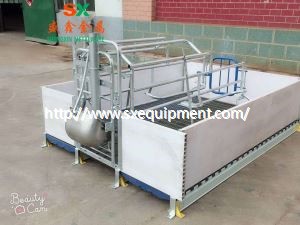


Clean all surfaces
Cleanliness and proper disinfection are major factors contributing to disease prevention in a breeding unit.A good wash starts with a complete breakdown of the farrowing room and farrowing crates. Then, all surfaces can be easily power washed using detergent and hot water with maximum pressure.Wash all components of the farrowing crate and room including feeder parts, both sides of farrowing mats, floors, walls, ceilings and feed lines. All organic material, such as placenta, feed and manure, should be removed during power washing.Inspect farrowing crates after washing and touch up any missed areas.
Disinfect to remove pathogens
Once the farrowing room is clean, use disinfectants to help eliminate pathogens and prevent disease. Ensure disinfectant is diluted properly according to the label instructions.If the disinfectant is too diluted, it won’t be as effective. A solution that’s too strong will provide no additional cleaning benefit and result in increased cost.Use a foamer or a gilmour with a foaming tip to apply disinfectant and make sure every surface is covered. Wash both sides of farrowing mats, flooring, alleyways, crates, panels and so on. Make sure no feeders have disinfectant pooled in the bottom. Drain feeders so sows do not ingest disinfectant.
Inspect the farrowing room
After washing and disinfecting the farrowing room, allow enough time for the room and equipment to dry. Doing so helps ensure pathogens are killed before sows return to the room.Meanwhile, inspect all farrowing crates and repair any damage before loading. Manage maintenance and repairs each time a room gets set up to provide the best care for animals and prevent injuries. Regular maintenance also prevents wear and tear on equipment.Inspect all ventilation/environmental components. Ensure equipment such as fans, heaters, inlets, baffles, curtains, drippers and cool cells work properly. Repair damaged flooring before loading the room. Check all feeders and drinkers to ensure they are working and there are no leaking nipples/pipes, split or broken feeders, broken feed tubes, boxes or feedlines.
Watch out for piglet safety
After the room has been inspected, it’s time to make the farrowing room comfortable for sows and soon-to-be- born piglets.Make sure ad-lib feeders are set up properly. Prepare an effective safe area with a mat and heat source for piglets before farrowing. Put creep mats 30 cm (12 in) from the back of the crate. Make sure there are no holes, tears or worn mats. Do not put powder on the mats before farrowing as it can reduce the mat temperature.All heat lamps or electric mats must work properly. Set heat lamps at the correct height, centered above farrowing mats. Make sure bulbs and shades are clean to achieve proper temperature. Double-check that mats are clean on both sides. Repair any damage or broken cords.
Set farrowing room temperature
Set room temperature at 22 to 23 °c (72 to 74 °f), according to your farm protocol. Target 32 to 35 °c (90 to 95 °f) in creep area.
Check the temperature with a heat gun prior to farrowing.
Timing is everything
The farrowing room must be set up before farrowing begins for the best odds of success. Don’t leave the task until it’s too late. Time spent preparing the room correctly saves time during farrowing. Create a clean, dry, safe and comfortable room where sows can give their litter the best start possible.
FAQ
Q: What is the purpose of a farrowing crate?
Q: What is the purpose of a farrowing house?
Q: How long do pigs stay in farrowing crates?
Q: Why do pigs get placed in farrowing rooms?
Q: What is the difference between a farrowing crate and a farrowing hut?
Q: What to do during farrowing?
Q: Do pigs need a farrowing pen?
Q: What is an alternative to farrowing crates?
Q: What are the positives of farrowing crates?
Q: Is the farrowing crate better than the pen?
Q: How long is a farrowing crate?
Q: How many piglets should be in a pen?
Q: When can you put a pig in a farrowing crate?
Q: Are farrowing crates good or bad?
Q: What is the difference between farrowing and farrowing crates?
Q: How long do pigs stay in farrowing crates?
Q: Why do pigs get placed in farrowing rooms?
Q: What is the purpose of a farrowing house?
Q: What are the good things about farrowing crates?
Q: Do pigs need a farrowing pen?
Qingdao Shengxin Metalware Co., Ltd. is one of the leading farrowing crate manufacturers and suppliers in China, providing the best quality farrowing crate with competitive price. Welcome to contact our factory to place orders.
Livestock Farm Equipment Sow Farrowing Stall, Farrowing crate with new design, Pig Farrowing Crate Of Farm EquipmentPopular Products