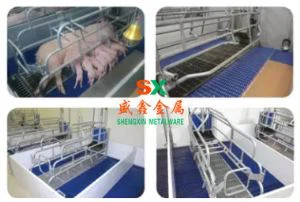
Gestation crates, also known as sow stalls, have long been a topic of intense ethical and scientific debate. As a supplier of Pig Gestation Crates, I am keenly aware of the various perspectives surrounding their use. In this blog post, I aim to delve into the ethical issues related to gestation crates, presenting both the concerns raised by critics and the potential benefits perceived by farmers.
The Ethical Concerns
One of the primary ethical issues associated with gestation crates is the severe restriction of the sow's movement. Pigs are intelligent and social animals with a natural inclination to explore, forage, and interact with their environment and other pigs. Gestation crates severely limit these abilities by confining sows to a space that is often just slightly larger than their body. They are unable to turn around, lie down comfortably, or exhibit normal social behaviors. This lack of movement not only causes physical discomfort but also leads to significant psychological stress.
The lack of exercise in gestation crates can result in a range of physical health problems for sows. Muscle atrophy and weakness are common due to the absence of regular movement. These sows are also more prone to lameness as their joints and limbs are not properly exercised. Additionally, the confined space can lead to dirty and unhygienic conditions, increasing the risk of infections and diseases. For example, the inability to move away from their own waste can cause skin problems and urinary tract infections.
Another ethical concern is the impact on the sow's maternal behavior. In a natural environment, sows would build nests before giving birth, which is an important part of their maternal instinct. However, in gestation crates, sows are denied the opportunity to perform this essential behavior. This can lead to frustration and abnormal maternal behavior, which may in turn affect the well - being of the piglets. The lack of proper maternal care can result in lower survival rates and poor health of the piglets.
Animal welfare advocates also argue that the use of gestation crates goes against the principle of respecting animals' rights. Pigs are sentient beings capable of feeling pain, stress, and boredom. Keeping them in such a restrictive environment for extended periods of time, often for the majority of their reproductive lives, is seen as a violation of their fundamental right to a life with a certain quality.
The Farmer's Perspective
Despite the ethical concerns, gestation crates are still used by many farmers, and they have their own reasons for doing so. One of the main reasons is economic efficiency. Gestation crates allow farmers to manage a large number of sows more effectively. By keeping sows in individual crates, farmers can accurately control their feed intake, which is crucial for maintaining the health of the sow and the development of the piglets. It also reduces the risk of aggression between sows, as pigs can be territorial and aggressive towards each other, especially during pregnancy. Aggression can lead to injuries and even death, which can be a significant economic loss for the farmer.
Another aspect is the ease of management. Tracking the health and well - being of individual sows is simpler when they are kept in crates. Farmers can easily observe the sows for signs of illness, injury, or other problems. This can lead to earlier detection and treatment, which is beneficial for both the animal's health and the farm's productivity.
Moreover, in some regions, the use of gestation crates is regulated with specific standards in place. These standards often aim to balance the need for animal welfare with the practical requirements of modern pig farming. For example, the crates are required to have a minimum size, and farmers are required to provide certain basic amenities such as proper ventilation, access to water, and appropriate bedding.
Our Role as a Supplier
As a supplier of Hot Galvanizing Pig Gestation Crates From SHENGXIN, we are aware of the ethical issues and the importance of animal welfare. Our products are designed to meet or exceed the industry standards. Our hot - galvanized crates are durable, corrosion - resistant, and provide a relatively clean and safe environment for the sows.
We also offer Pig Gestation Crate With Drinker, which ensures that sows have easy access to clean water at all times. This is an important aspect of animal welfare as proper hydration is essential for the health of the sows and the development of the piglets. Our Hot Galvanized Pig Gestation Crates are constructed with high - quality materials and advanced manufacturing techniques to ensure the safety and comfort of the animals to the best possible extent within the scope of the crate system.
In addition to these products, we also provide Pig Equipment Pig Farrowing Crate With PVC Fence Livestock Machinery. This farrowing crate is designed to provide a suitable environment for the sow and the newborn piglets. The PVC fence provides a certain degree of protection and separation while also allowing for some interaction between the sow and the piglets.
Finding a Balance
To address the ethical concerns, it is essential to find a balance between animal welfare and the practical needs of pig farming. One solution is to transition to group housing systems where sows can interact with each other and move more freely. However, group housing also presents its own challenges, such as managing aggression between sows and ensuring proper feed distribution.
Farmers can also implement other welfare - enhancing measures within the crate system. For example, providing environmental enrichment such as chew toys or manipulable objects can help reduce boredom and stress for the sows. Regular exercise programs, even if limited, can be beneficial for the physical health of the sows.
Consumers also play an important role in this issue. By making informed choices and demanding products from farms that prioritize animal welfare, they can drive the industry towards more ethical practices. Retailers and food companies can also influence the market by setting higher animal welfare standards for their suppliers.
Conclusion
The ethical issues surrounding gestation crates are complex and multi - faceted. While there are valid concerns about the welfare of sows in these crates, there are also practical reasons why they are still used in modern pig farming. As a supplier, we are committed to providing high - quality products that meet the needs of farmers while also considering the well - being of the animals.


We believe that by working together, farmers, suppliers, consumers, and policymakers can find solutions that balance the economic and practical aspects of pig farming with the ethical responsibility of ensuring good animal welfare. If you are interested in our products or have any questions about our Pig Gestation Crates, we welcome you to contact us for further discussion and potential procurement negotiations.
References
- Botreau, R., et al. "On - farm evaluation of welfare in growing pigs and sows." Livestock Science 122.1 - 3 (2009): 1 - 18.
- Main, D. C., et al. "A review of the human–animal relationship in livestock production systems." Animal Welfare 14.2 (2005): 189 - 203.
- Von Borell, E., et al. "Welfare assessment of pigs on - farm and at the abattoir: a review." Livestock Science 122.1 - 3 (2009): 103 - 118.